
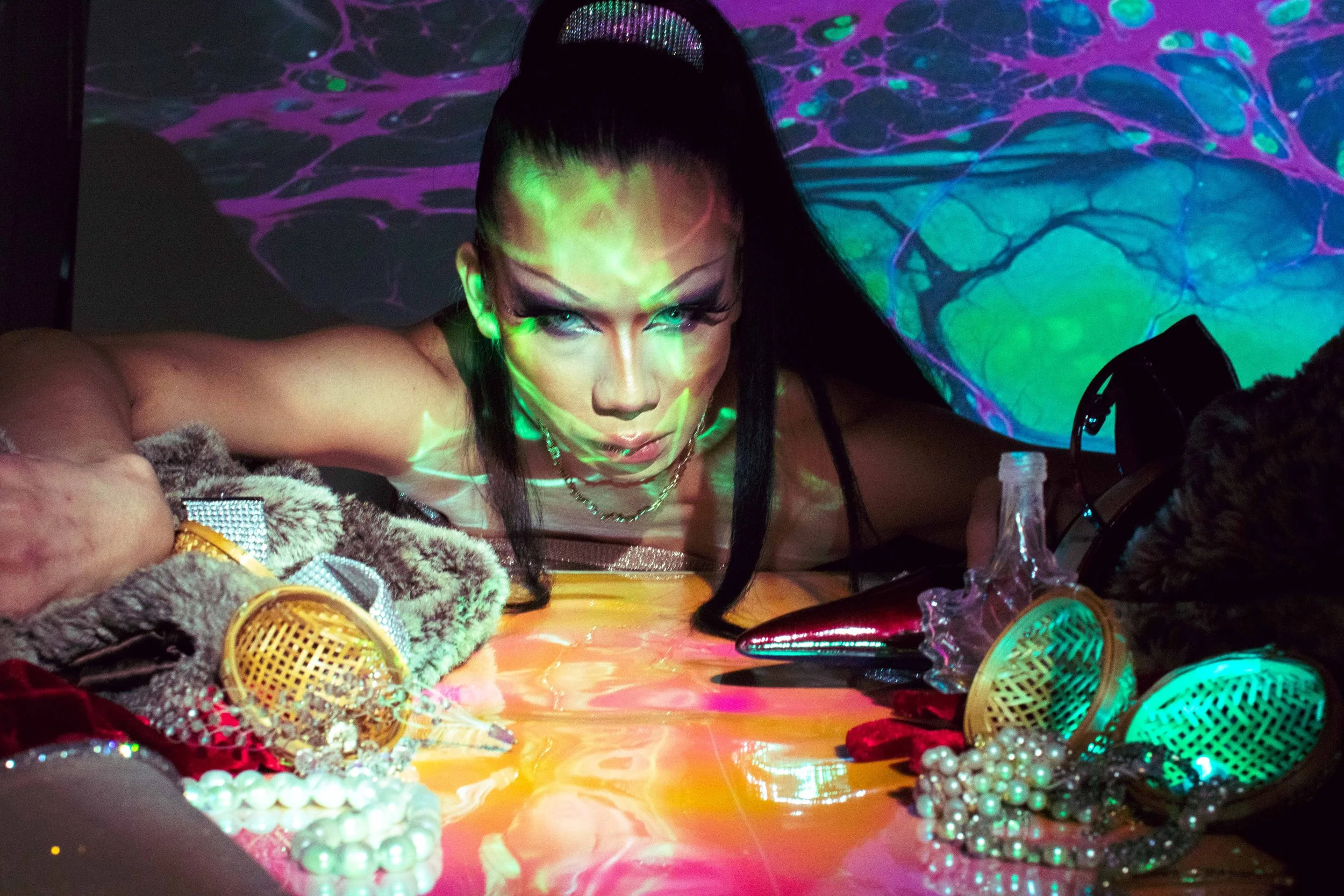
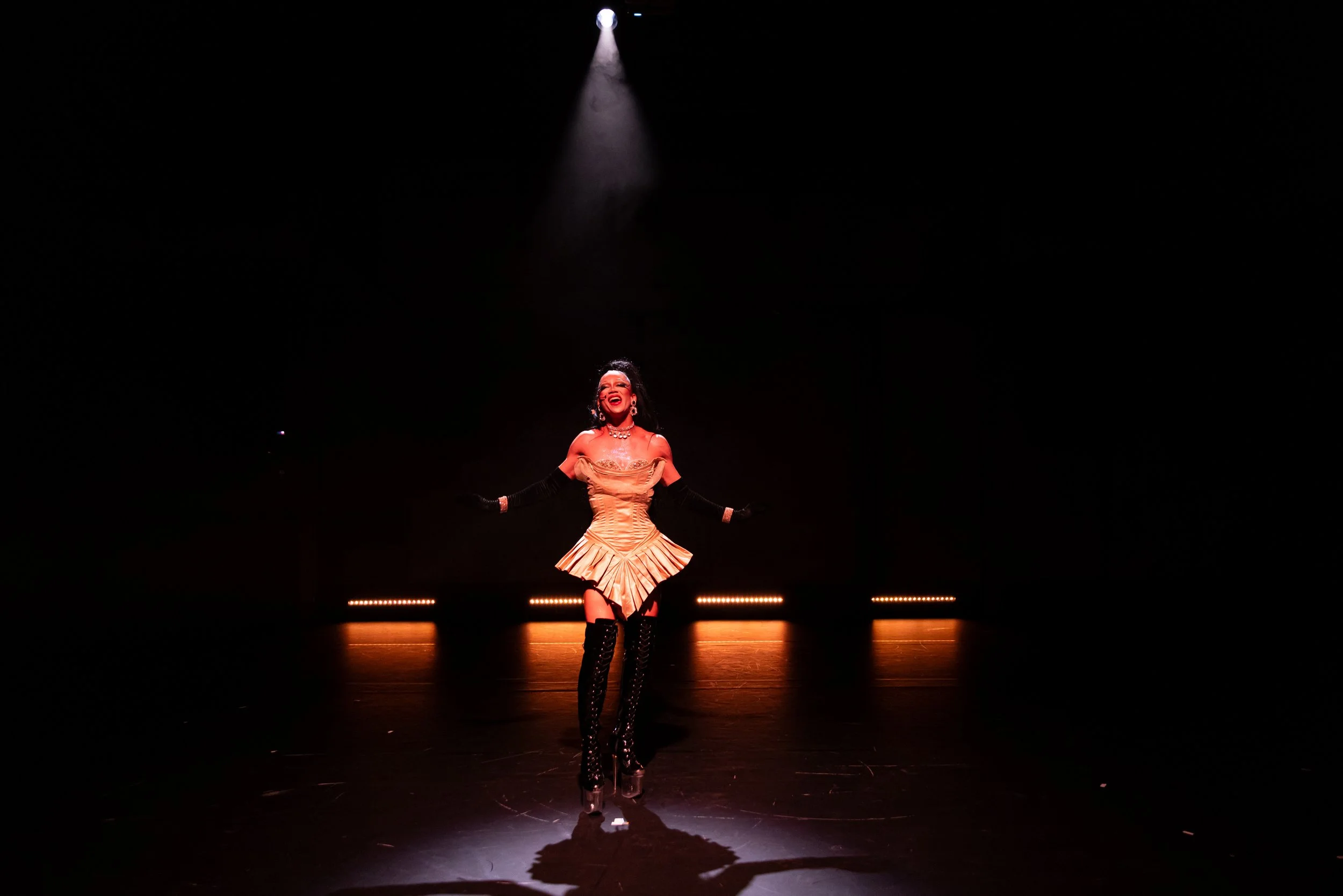
Enter “BIBINGKA”, an artistic methodology:
How does the work move?
Bibingka is a drag persona I created in 2022, shortly after returning to Berlin following the end of a being in relationships for twelve consecutive years. What began as a space to hold grief gradually became an artistic methodology. Rather than offering an escape from loss, Bibingka opened a way of returning—to language, memory, humour, and forms of knowledge that colonial histories had taught me to overlook.
Growing up in the Philippines, my understanding of beauty, desire, and success was shaped by the intertwined legacies of Spanish colonialism and U.S. imperialism. Those inheritances continued to inform my intimate relationships, my body, and my imagination long after I migrated. Naming my drag persona Bibingka, after the Filipino rice cake, became one of my first gestures of return. Through performance, lip-sync, and drag, I began reclaiming Tagalog as a performative language alongside forms of Filipino wit, humour, and play that had become distant after more than two decades abroad.
Bibingka is not a character separate from myself but an embodied practice of disidentification. Borrowing from José Esteban Muñoz's understanding of the term, she allows me to inhabit colonial inheritances without either rejecting or reproducing them. Instead, they are transformed through exaggeration, repetition, ritual, and speculation.
Within Bibingka, beauty standards inherited through U.S. imperialism, Catholic iconographies introduced through Spanish colonization, and the material language of drag become raw materials for thinking with the body. A tightly bound ponytail explores discipline, elegance, and restraint. A corset asks how freedom can be negotiated from within structures that constrain the body. Eight-inch heels transform instability into endurance, revealing strength beneath displacement. These materials are not simply symbolic; they are choreographic tools that generate relational knowledge through performance.
If disidentification creates distance from inherited identities, fabulation creates space for imagining what those histories could not contain. Through Bibingka, I generate new forms of gestures, rituals, and relationships. She becomes a way of authoring histories where racialized and queer bodies are no longer only represented by others but become authors of their own narratives.
Bibingka also creates space to reconnect with histories of queer and gender-diverse existence that preceded colonization in the Philippines. Through performance, diasporic drag becomes not only a site of survival but also a practice of reclamation, spiritual inquiry, and collective imagination. She is not an escape from history, but a way of living with it differently—through care, humour, kinship, and the ongoing work of becoming.